Fascinating, exciting, extremely entertaining — what a wonderful new game!”
— Grandmaster Kevin Spraggett
Mating attacks are the norm. Anyone can hope to discover new principles or opening lines.”
— Grandmaster Larry Kaufman
Every bit as intriguing as standard chess. Beautiful roads keep branching off in all directions, and sharp-eyed beginners sometimes roll right over the experts.”
— FIDE Master Robert Hamilton
With only a few rule changes, Hostage Chess creates a marvelously exciting variant on the classical game.”
— International Master Lawrence Day
Chess is not yet played out, but it is no longer possible to perform at a high level without a detailed knowledge of openings. In Hostage Chess creativity and imagination flourish, and fun returns.”
— Peter Coast,
ex Scottish Champion
Probably the most remarkable chess variant of the last fifty years. Captured men are hostages that can be exchanged. Play is rarely less than exciting, sometimes with several reversals of fortune. Dramatic mates are the rule, not the exception. ”
— D.B.Pritchard, author of "The Encyclopedia of Chess Variants"
It develops your imagination, your sense for the big fish lurking in chess waters. ”
— John Leslie, originator of Hostage Chess
|
Here's a very short example game of Hostage Chess, with every move diagrammed, so you can follow along without a board.
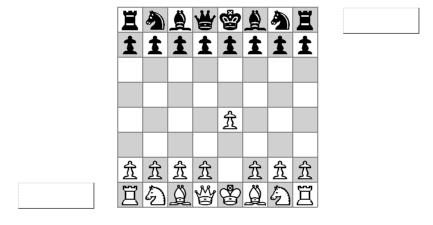 |
1. e4
White makes what is perhaps an obvious opening move.
(Though, opening theory for Hostage Chess needs work!)
|
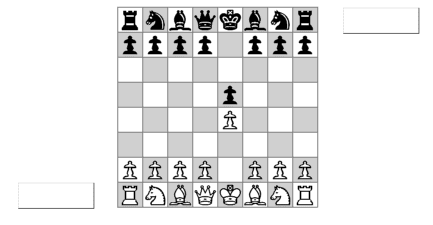 |
1... e5
Black replies by also claiming a share of the centre.
|
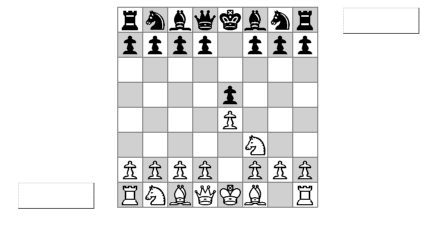 |
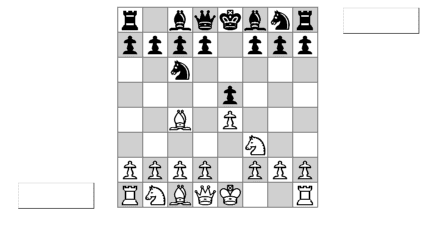
2. Nf3
White starts piece development.
|
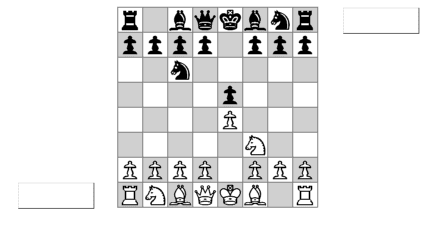 |
2... Nc6
Black also.
|
 |
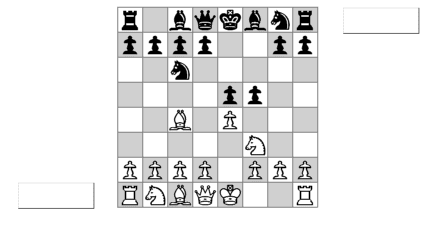
3. Bc4
White places the bishop in an attacking position.
|
 |
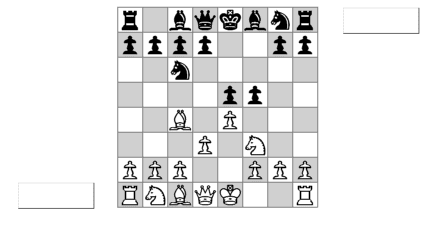
3... f5
Black makes an ambitious but unwise pawn move, opening up the game.
|
 |
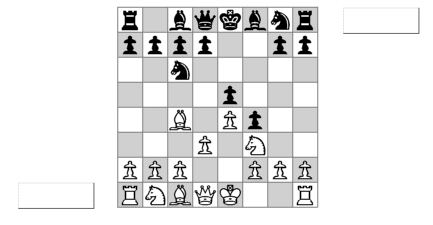
4. d3
White defends the pawn on e4.
|
 |
4... f4
Black tries to close down White's opportunities.
|
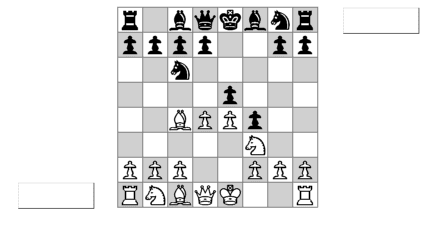 |
5. d4
And White tries to make more of them.
|
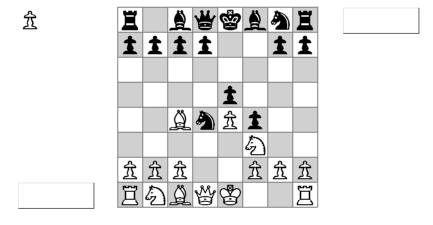 |
5... Nxd4
Black makes the first capture of the game, taking a pawn. Note that the captured White pawn has been placed into its prison, shown in the diagram at the top left of the board.
|
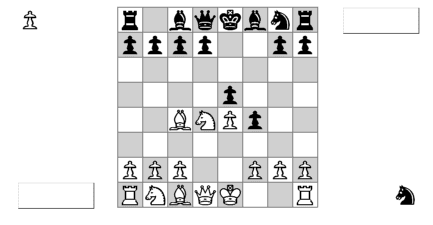 |
6. Nxd4
White captures the Black knight, which is placed into the opposing prison, shown at the bottom right of the diagram.
|
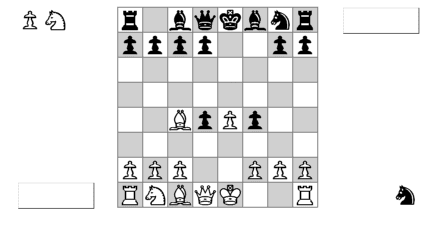 |
6... exd4
Black takes back the knight. There are now a White pawn and knight in prison.
|
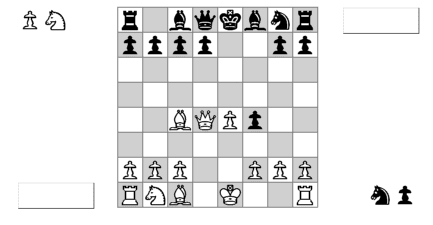 |
7. Qxd4
Now the position is good for White.
|
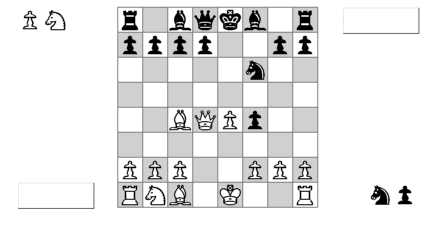 |
7... Nf6
Black tries to get more pieces into play.
|
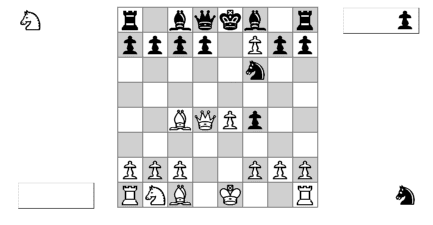 |
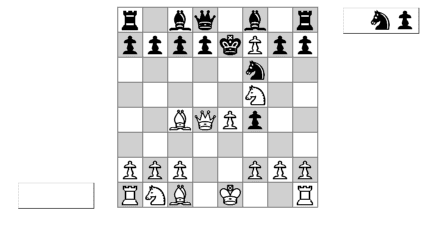
8. (P)P*f7 +
White drops a pawn from prison onto f7, checking the Black king. Since the White pawn has been dropped from prison, a Black pawn has also been freed from its prison, and is placed into its airfield, shown at the top right of the diagram.
|
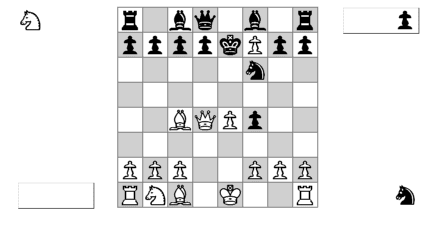 |
8... Ke7
Black moves the King forwards, out of check.
|
 |
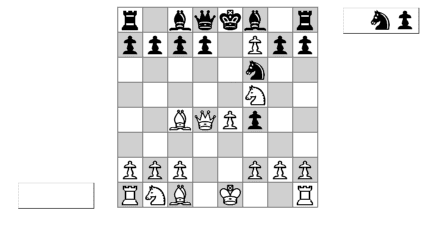
9. (N)N*f5+
White brings another piece from prison into play, dropping it onto f5. To allow that, a Black knight has been moved from prison to the airfield.
|
 |
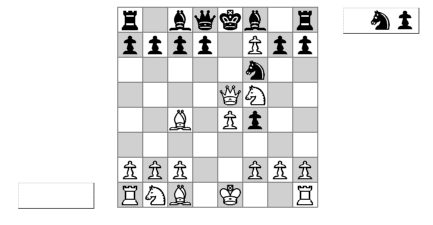
9... Ke8
Black retreats. To a player of regular chess, it looks as if Black is still in check. But in Hostage Chess, a pawn can only be moved onto an 8th rank promotion square if there is a promotion piece available to be freed from prison. Since there is no White promotion piece in prison, the pawn on f7 cannot be promoted -- so it is not checking the Black king.
But note that just as soon as there is a White piece in prison, that pawn will be checking. So long as this situation continues (White pawn on f7, Black king on e8), Black may not legally capture any of White's pieces, since that would make the pawn on f7 give check! |
 |
10. Qe5+
White continues the attack.
|
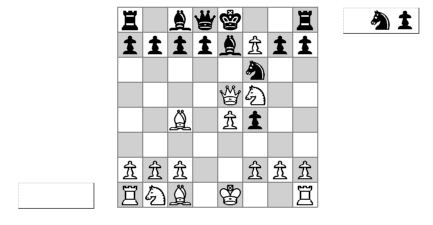 |
10... Be7
Black blocks the attack of White's Queen.
|
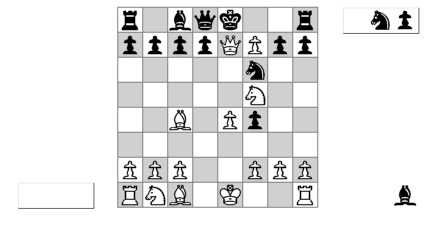 |
11. Qxe7 mate
It looks as though Black could capture the White queen. But, remember, that pawn on f7 will be checking just as soon as there is a White piece in prison. So Black can't take the White queen, since that would mean that the pawn on f7 would then be checking!
So it's mate. |
|